In the Mix

HillandaleNick Churton of Mayfair International Realty vistits a New Jersey house with quite a past but also a wonderful future.

How ironic that a German family who had emigrated to America to make their fortune should do so, only to lose it because the German navy sank their ships. The Great War was unkind to the Mosle family who had built up a successful sugar cane and shipping business out of Cuba.

In 1899 the Mosles began building Hillandale, a substantial mansion between the villages of Peapack-Gladstone and Mendham in an astonishingly beautiful and leafy part of New Jersey – about 33 miles from Manhattan. Designed by architect, Grosvenor Atterbury, it isn’t too fanciful to suggest that there are some strong German influences at work here. The result is a muscular stone-faced hill top house with three distinctive hipped roof gables to its front and rear elevations.

Later, after the Mosles had left for pastures new and the house had had several other subsequent owners, it was bought by The Sisters of John the Baptist who ran it first as an orphanage for boys and then a boarding and day school. Even today thankful old-boys who had been in the good care of the holy sisters stay in touch – more than can be said for unlucky children in some other institutions around the world. This house has a happy past after all.

So what next for Hillandale? Well of course it is up to the buyer. Perhaps someone will want to turn it back into a single family home. More likely the house, with all its wonderful architectural features and ancillary buildings, will be cleverly converted into luxury condominiums. There is quite a market for these in well-heeled Somerset County. Many local people would like the chance to trade down to something smaller, but with no diminution in standards from where they live at the moment. No worries on that account here. Hillandale oozes gravitas.

Take a ride and inspect. When you turn into the drive off Mosle Road and begin the long climb up to the house play some Wagner very loud. The Ride of the Valkyries would be ideal. It will put you in the mood and remind you never to do business that mixes sugar, ships and submarines.


Posted in Turpin Realtors | Leave a comment

How to Make an American Quilt

please click on image for further details

Please click on image for further details

Nick Churton of Mayfair International Realty enjoys a comfortable and creativly fashioned home in New York.

At their best American quilts can be items of utmost and complex beauty. When the component parts are beautiful in their own right, when the maker has a talented eye for design, pattern and colour – and great skill with a needle – then a quilt can reach the very highest plane of art and craft.

So it was no real surprise to find that one of the owners of 340 Croton Lake Road, New York is a supreme quilt maker, as her eye, touch and flair can be seen across the whole of this property.

This magnificent home, only about 40 miles from New York City, has an airy position high above the Croton Reservoir.  This is no bland body of water.  It winds river-like for nine miles through steep-sided wooded hills and provides this eyrie with an outstanding backdrop.

Yet despite the superb view it is the architectural and interior detail and design that really holds the attention.  Each room, each window, floor, door, fixture, fitting, work surface, picture and stick of furniture is brought together with a glorious garden into one harmonious whole. It is like an American quilt – a brilliant creator has sewn all the exquisite elements tightly together into a living masterpiece.

It is impossible not to become wrapped up in this house.

Posted in Houlihan Lawrence | Leave a comment

Aye-Wiay to Paradise

Click on image for further details

Nick Churton of Mayfair International Realty relives a childhood dream in the remote and romantic Outer Hebrides.

After his terrible defeat at the battle of Culloden in 1746 – when the British army led by the ‘Butcher Cumberland’ ruthlessly crushed the Scottish Jacobites – Bonnie Prince Charlie escaped to the islands of the Outer Hebrides. There he found supporters to give him food and natural terrain to give him shelter. It is from here that the Prince escaped with Flora McDonald over the sea to Skye in an open boat. Follow, the English Redcoats did not dare.

As a small boy holidaying in this part of the world I dreamt of a life spent in this most romantic of locations – a place where only the eagle has full access.

Now I am a bit older I can dream of this life again as one of these remote, wild, beautiful islands is for sale. Better still, this one has it is said a cave used by the Young Pretender himself for evading the Redcoats. Some American Patriots thirty years later would understand the feeling.

The island, called Wiay, is close to Benbecula, one of the most southerly of the main Hebridean islands. Wiay has about 970 acres, a ruined croft and no electricity, gas or mains water. There is a sheltered anchorage and it is 15 minutes by boat and another 15 minutes on foot to the nearest shop. If the weather is bad don’t bother. You know what they say about the weather in this part of the world – if it isn’t raining it’s about to. But when the weather is fine I promise you there is not a more achingly beautiful or more blissfully peaceful place in the world in which to be.

Take your rod to catch trout for the pan and your gun to shoot woodcock for the pot. Forage the foreshore for mussels. You can renovate the crofter’s cottage into a cosy retreat using peat dug from the bog for the fire in the way of the old crofters – that is if you are not at all ecologically minded! But then to live on this island nowadays you probably will be, so you will have to figure out another way to keep warm and cook. There are no trees for firewood.

If you have seen Burt Lancaster fall in love with a Scottish beach in the film, Local Hero, you may understand a little what this place is like – except on Wiay there are no locals to interrupt the plaintive cry of the curlew or the piercing squeak of the oystercatcher as it busily twists and turns low above rocks and sand at low tide.

Here is a place on which children’s dreams and adults’ lives are made.

Posted in Bell Ingram | 1 Comment

A Perfect Storm Porch

Please click on image for more details

Nick Churton of Mayfair International Realty looks at a wonderful house in a beautiful Nova Scotian coastal town made for sailing.

The north east coast of North America has a long and celebrated relationship with the sea. The fishing communities of Maine and Connecticut in the US and Nova Scotia and Newfoundland in Canada have made hard and sometimes heartbreaking livings off the Grand Banks in the cruel but bountiful North Atlantic.

Nowadays the sea may be the same but the living is not so harsh. Indeed many of the once hard-pressed but charming seaside harbour towns have now become important holiday and second home destinations.  One of the finest is Chester in Nova Scotia, about 50 miles south of Halifax the province’s thriving capital. Chester is a charming and neighbourly town hugging a rugged coastline which provides a playground of inlets, islands and protected sailing waters.  The Chester Sailing Club established in 1900, is at the heart of this activity.  They sail the classic Bluenose sloop here. I have raced one in the harbour at Chester with the excellent Tim Harris, founder and owner of Tradewinds Realty.

So I was thrilled to see that Tim and Tradewinds had been chosen to market a very distinguished waterfront house in Chester called The Jib House. Actually it looks more like a mansion – and a Governor’s mansion to boot. The well-sheltered Georgian influenced home with its distinctive and stylish double-height pedimented storm porch faces south and looks directly over Chester’s Back Harbour and the islands of Mahone Bay. The former boathouse is now a fully equipped guesthouse and there is about 400 ft of shoreline with dock.

Because it is so imposing The Jib House can’t fail to catch the eye. It caught the eye of film location scouts seeking the perfect house to set the 1995 film, Dolores Claiborne, starring Kathy Bates and Jennifer Jason Leigh and based on the Stephen King book.

So if you are fishing for a perfect storm of a house on the Nova Scotia coast – one where all the elements align to create a magnificent home in a stunning position then you will like the cut of this jib.

Posted in Tradewinds Realty | Leave a comment

Peach of a Place

The peach house 2Nick Churton of Mayfair International Realty discovers a unique building in an English country garden.

In Codicote – which is a small village about 30 miles north of London – is a fairly large country house called The Node. A wealthy-ish Victorian built it in the mid 1800s. It has had a chequered history. After serving as a comfortable home it later became a corporate HQ for various large organisations including the oil company, Shell, when it was used as a management training facility. Treated as a balance sheet asset and business tool rather than a home the house and grounds suffered and eventually became run down and then, latterly, redundant. The house was left purposeless and empty. It was a great shame.

Wrapped round the attractive house and its large and impressive coach-house is a once-fine garden that, along with the buildings, has gone to seed. This has been the fate of countless English country houses with fine gardens over the years when they were deemed to be too large for a modern small family without staff, and in any event too expensive to renovate. The solution for some of these houses has been drastic – demolition. The answer for others has been a conversion to suit modern lifestyles.

Fortunately the latter solution is being applied to The Node. The project is being jointly handled between two firms of respected local developers. A project manager who has previously worked on sensitive buildings such as Buckingham Palace and the Houses of Parliament will oversee it on a day-to-day basis.

The Victorian house will be carefully restored and made into spacious apartments. Outside in the grounds some new houses in the Arts & Crafts style will be built. There will be seventeen units in all, including a fabulous contemporary-designed house in the round with the original Victorian­­­ high brick garden wall running through it.

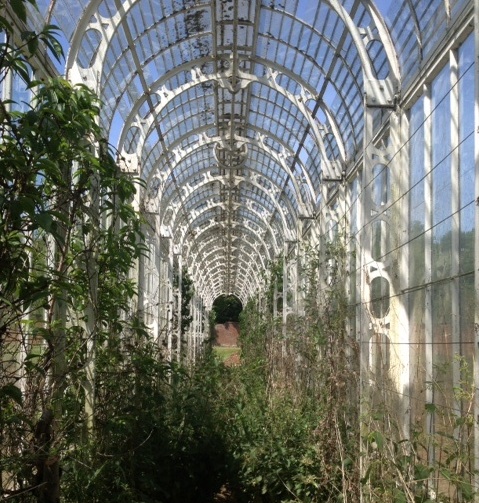
Another special feature of this project is the garden. This is an important landscape. Designed around the house by Victorian landscape architect, James Pulham, it had become overlooked and overgrown – a lost garden in the great tradition of British lost gardens. Among some very fine features, including a fabulous chinoiserie fountain and beautiful rock cascade – a speciality of Pulham – there is one particular structure that must be mentioned. It is a peach house.

The Victorians loved to grow tropical and exotic fruit. Not having the climate in England for these fruits to grow outside, they built special glasshouses to provide the correct growing conditions. These came in many shapes and sizes according to the fruit they were designed to accommodate. Perhaps the most rare and beautiful of these is the peach house. So rare is this structure that it is thought to be the only one left in existence. It was designed by Joseph Paxton and built in 1854. Like the rest of the house and garden the peach house will be restored to its former glory, which for residents, visitors and garden enthusiasts the world over makes this whole project a peach.

For further details please contact: Mark Shearing, Putterills New Homes Department, 32 Bridge Street, Hitchin, Herts SG5 2DF.  Tel: +44 (0)1462 453195

Posted in Putterills | Leave a comment

Finders Keepers, Losers Weepers

Nick Churton of Mayfair International Realty introduces a very special house in the heart if the English countryside.

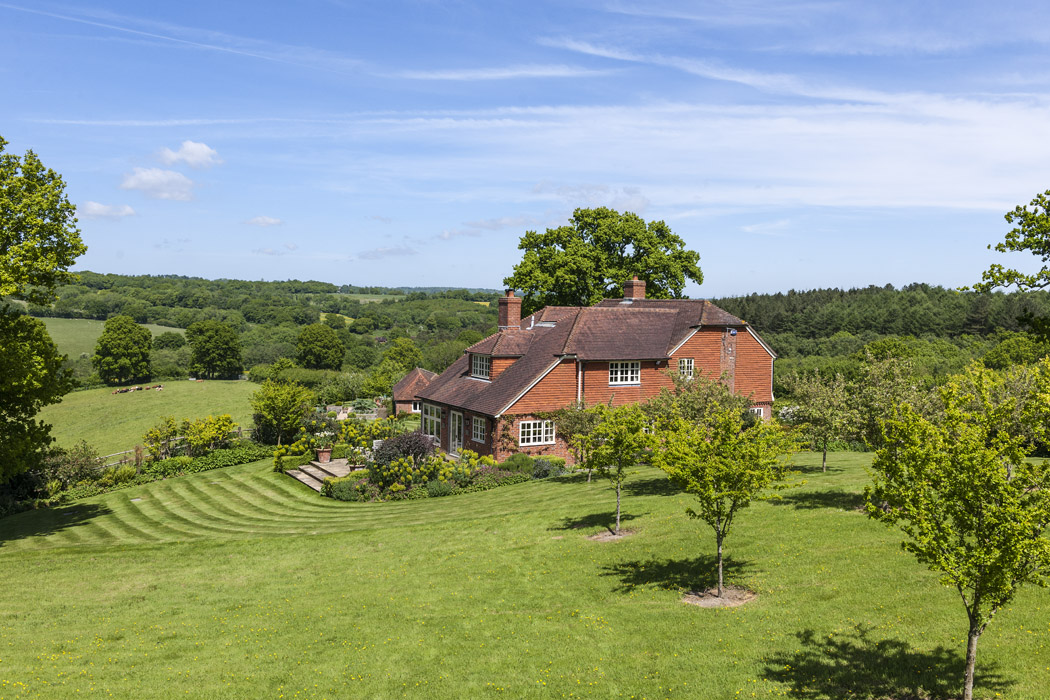
Take a beautiful East Sussex farmhouse, about 50 miles by road from London, with a distinctive hipped roof and pretty, tile-hung elevations; place it on a gentle slope with views over a peaceful and beautiful partly wooded valley. Take the interior and work it into an intimate space of great elegance and style. Then wrap around a garden landscaped with skill, planted with flair and tended with love. Add a guest cottage and a garden studio; insulate it all from unnatural visual and audible interferences and you have a little piece of English rural heaven.

The thing about the south east of England – even its loveliest rural areas – is that it can be a bit crowded. It’s a busy part of the world really and a lot of people live and travel about there. So it is very hard to find a house without near neighbours, or a view without evidence of human infrastructure, or without invasive road traffic and aircraft noise. Indeed, it is nigh on impossible. Which is why Winters Farm, near Royal Tunbridge Wells, is so special. It is innocent of all these nuisances.

I can imagine an agent showing buyers around the neighbourhood saying, “Now let me take you somewhere very special, a magical place that you can’t even begin to dream exists; a place of such seclusion and privacy that if I didn’t take you, you would never discover; a place with rooms you will never weary of living in and with a view that you will never tire of seeing.”

And really that is all that has to be said. Because to visit Winters Farm is to want to stay. You don’t believe me? Find it and find out.

For further details please contact: A.Brooks@batchellermonkhouse.com

Posted in Batcheller Monkhouse | Leave a comment

iPadded Upstairs and Down

Please click on image for further details

Nick Churton of Mayfair International Realty finds the Modernist ideal alive and well in Houston Texas.

Architecture in Houston, Texas is a strong mix of styles and ideas. Some work well. Some perhaps not so – but then that goes for anywhere. But when the architecture does work well it can be uplifting. Take 1614 Driscoll Street for example. Here is a Modernist interpretation that raises the spirit. Good houses do that.

A difficulty with original Modernist houses built in the early 20th century is that their building material has been apt to degrade – especially in wetter climates. But today modern materials make structures so much more durable and ideal for 21st century construction and techniques.

This is a very fine execution of the Modernist ideal. One is met by a soaring, double height open plan living and dining area with a beautiful heavy timber treaded stair which rises, spine like, to the upper floor. All walls are white except the one flanking the stair which is grey. Don’t ask me why it works so well, I’m not an interior designer – but it does.

Another thing the early Modernists didn’t have to play with was today’s technology. IPads sunk into the walls here control heat, light, security and entertainment from within the property or from anywhere in the world with a signal. Outside are plunge pool, spa and a clever little three hole putting green with artificial surface that makes brilliant use of a narrow and otherwise unutilised area.

It is all here – the modern house for the modern dweller. One thing the buyer will need to be is as neat and tidy as the design. Modernism is a way of life and comes at a price. Part of that price is order. There is also the price of purchase. One of the reasons I like this house so much is its value-for-money location.  This area is on the up and rising quickly. It’s easy to see why. It is just round the corner from some very snappy shops and restaurants on West Grey Street, and only two or three easy miles from Downtown Houston and the vast Houston medical centre – both areas are huge employers. Take a look at the details on an iPad and then get in quick.

Posted in John Daugherty | Leave a comment

A River Runs Past It

Please click on image for more details.

Nick Churton of Mayfair International Realty steps back five hundred years in England and discovers a Tudor gem near Oxford.

The river Thames wanders for 215 miles like a liquid ribbon of history through southern England. At first it meanders lazily through fields and meadows having risen at Thames Head in Gloucestershire. Further downstream it becomes more purposeful in its flow before reaching tidal London. The UK capital became large, wealthy and strong from the river’s dual navigable access to the sea and rural interior. For millennia the river has provided a natural artery for transportation and trade long before there was an effective road alternative.

I was reminded of this when I saw St Lucians at Wallingford in the county of Oxfordshire. Built in the mid 1500s when King Henry VIII was on the throne, and with a magnificent malt barn and hop kiln added during the time of King Charles I – executed in 1649 – this wonderful Tudor house is living history. There would have been activity on this site from Saxon times and, it is thought, the original building has only been in the possession of about five different families since it was built. It was last on the market in 1880.

Everywhere there are expressions of Tudor architecture especially the distinctive flattened door and window arches of that period. Stained glass provides early provenance through the heraldic device of a previous owner in the 1600s. The gardens lead down to the river with a private mooring and a view that will have altered very little in five hundred years. There is no reason to suppose that the fireplaces, timber mullions, floorboards and heavy planked and studded oak front door are not original. If the walls had ears they would have heard about Elizabeth I, Shakespeare, Oliver Cromwell and the English Civil War, the Restoration of the monarchy, wars with the French, the Dutch, the Spaniards and the Patriots in the American colonies. They would have heard about the Industrial Revolution and devastating loss of life – and loss of way-of-life – through two world wars. And all the while the Thames has swept quietly past.

This is a wonderful opportunity to buy a piece of English history. But rather than buying the property, the next owner will really be buying a stewardship. He or she will be the custodians of an important house of antiquity. Long after they have moved on – or passed on – the house will remain proudly by the riverside watching the world go by. As each year passes it will reach further back into the past and grow more in significance and beauty. To purchase this house is to become part of its rich history.

For more information on Tudor architecture please see http://www.mayfairoffice.co.uk/members/tudor.aspx.

Posted in Dudley Singleton & Daughter | Leave a comment

Toga Party

Please click on image for further details

Nick Churton of Mayfair International travels back to the future – not in the hills above Rome, but the hills above Austin, Texas.

Roman builders knew a thing or two. So brilliant were they that even today their style is copied either purposely or subconsciously by their modern day counterparts. Those distinctive Roman style signatures such as columns and arches crop up today time and time again and sometimes in the most un-Roman of places.

So when I was visiting a number of great houses in the lovely hills above Austin, Texas recently I strode into one which, modern as it was in design and new as it was in construction, was somehow Roman in essence – at least outside. Clearly the architect’s desire was to make this villa as private as possible and to introduce a closely connected outside space of great intimacy with the main house. The Romans used to build an enclosed piazza. Which is exactly what has happened here. At the rear of the U-shaped house three sides open onto the tiled piazza with pool. The fourth side takes the form of a colonnade that houses pool house and summer kitchen. The result is a house within its own little world.

All that is needed is a few suitable statues of toga-clad figures and a mosaic on the floor and the picture would be almost complete. But ancient as it is in concept this is an elegant and fresh contemporary space. The thing with Greek and Roman architecture is that it is not just for the Greeks and Romans – it is for all humans. This layout works as well in Austin as it would have done in Asisium and as well in 2013 AD as it would have in 13 AD. This is architecture that connects with the human spirit at a most instinctive level. One doesn’t have to know about the origins of this style to be comfortable with it.

Romans lived in houses that allowed them live well. This house will do the same for its buyer.

Posted in Turnquist Partners | Leave a comment

Forever Frank

Please click on image for further information.

Nick Churton of Mayfair International Realty follows in the footsteps of the master by visiting a splendid house in Houston.

I’m a big fan of Frank Lloyd Wright. So, clearly, is the designer of 5477 Doliver Dr in Tanglewood, Houston, Texas – the sought-after neighbourhood which was once described as the best sub-division in America.

Those followers of Frank Lloyd Wright consider the great man to be the grandfather of modern architecture, and his influence is seen all around the world over a hundred years since he up his practise in 1893.

5477 Doliver Dr is a very fine house that unashamedly follows Lloyd Wright signatures – deep, over-sailing eaves that create a strong feeling of intimacy and shelter, and windows that provide curtains of glass which, in parts, join at the building’s corners without vertical mullions – giving the exterior brickwork the appearance that it is somehow floating.  These, and the shallow pitched, Prairie styled roof, plus the strong vertical and horizontal lines all suggest the master’s influence.

But influence is one thing; carrying it out successfully in a new building is quite another. I’d say that this has been done very well indeed. This is a no nonsense house. No frippery here. It is a crisp space of brick, stone and timber. Yet these warm, natural materials contribute in making it a house ideal for family and entertaining.

But what I really loved about this house is the craftsmanship. Frank Lloyd Wright was a pioneer in the Arts and Crafts movement. To him fine craftsmanship was as integral to the houses he designed as clean, sharp elevations. Here the superior craftsmanship is to be seen everywhere, especially the woodwork. It screams quality of design and execution – with the use of two-tone timber in cabinetry and doorframes of particular note and merit.

So there we have it – touchingly and imaginatively conceived, superbly built, and handsomely located – a house of today, inspired by yesterday, for an owner of tomorrow.

Posted in John Daugherty | Leave a comment